Location: National Gallery, London
On this visit to the National Gallery, the main focus was to tour a collection of rooms that were briefly looked at on the previous visit. Now for a review of the National Gallery's collection of Impressionist and Post-Impressionist paintings.
Of the rooms concerned, they have a simple décor, with plain brown-grey painted walls, plain white ceilings with some nicely crafted decorations and some windows to give air and light. As for lighting in general, there are plenty of spot-lights dotted around, giving plenty of light to see details. All this amounts to rooms with a complete focus on the exhibits only.

The Harry and Carol Djanogly room.
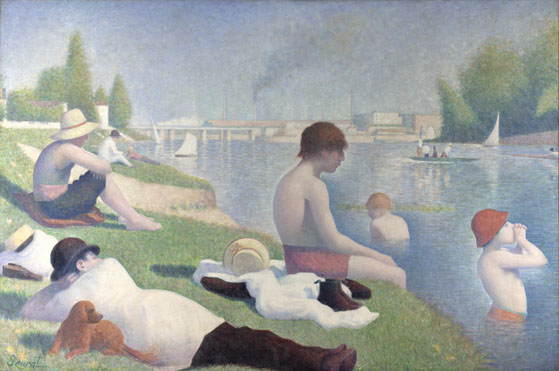
This room opens out, in the middle of this series of four, with nothing short of the 'Bathers at Asniéres' surrounding by a small portfolio of smaller pieces by Georges Seurat, including his studies for the Bathers. All of these show off his calm use of colour, and particular dotted style of painting that composes the scene. The centre-piece itself gives off a particularly tranquil feeling, depicting a scene of calmness in all the people shown.

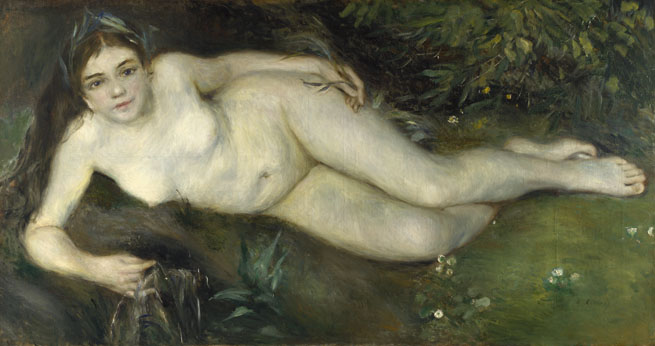
While Seurat was certainly the centre of attention here, the room has quite a number of other paintings on display of other famous painters of the period, starting with none less than Renoir, and a flurry of vivid and colourful paintings. 'Nymph by a stream' was an eye-catching example for both its use of contrasting colour, the dark green background to the pale nude model in the centre, and classical mythological aspect, followed by the wide range of soft colours in 'Dancing girl with tambourine', and 'Misia Sert', the former gives a dynamic feel of movement, while the latter shows a still model with a relaxed look.

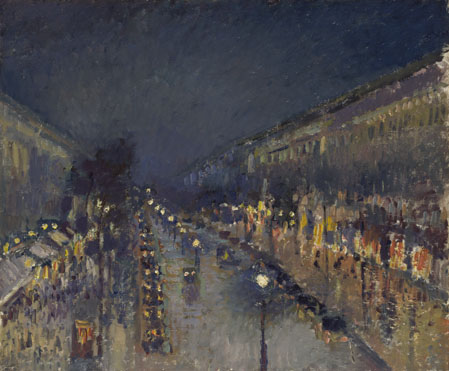
Last notable artist in the room was Pissarro, with a selection of landscape scenes, with the exception of his 'Portait of Cézanne'. There were a few paintings of cottages and country landscapes in both France and England, one example being 'Fox hill, Upper Norwood', there was also the 'Boulevard MontMartre at night', though it lacked its day time counterpart here.

Monet, Manet, and Impressionism
The second room of this tour takes one through another selection of the famous, though by reading the introduction, one gets the impression that these artists were seen as infamous within artistic circles. After that, one then should gain a considerable appreciation of the efforts these artists expended in embarking on an artistic style that alienated them from the mainstream.
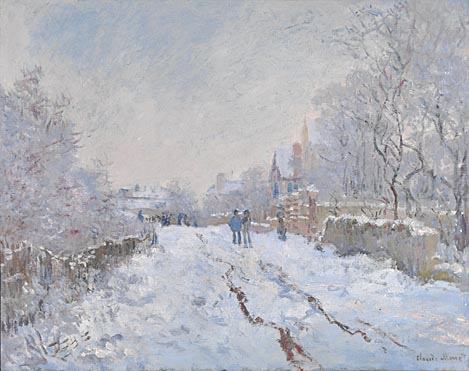
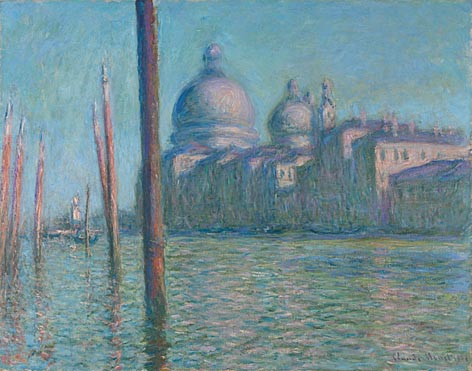
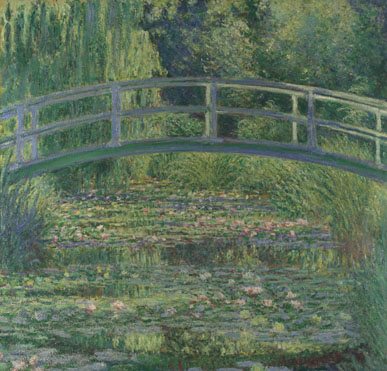
Monet was the first one on this tour, with his use of bright colours, and quick brush strokes. There were quite a number of excellent scenes, but a few really do catch the eye, such as the sombre coloured 'Thames below Westminster', the winterscape titled 'Snow scene at Argenteuil', and 'The Grand Canal, Venice'. There was also a selection of vivid garden scenes, comprising of the famous 'Water Lily pond' next to the smaller 'Water Lilies, setting sun'.
Now if one goes across the room, or will be just made aware of the rest of Monet's paintings in this room, more landscape scenes such as the sunny 'La Pointe de la Hève, St. Addresse', dark and smoky 'Gare St. Lazare', and the almost fluidly painted scene 'Bathers at La Grenouilliere'.
Moving on, there are the more subtle colours of Sisley in 'The watering place at Marley-Le-Roi', 'The small meadows in Spring' and 'The Seine at Port-Marley'. All excellent examples of another major Impressionist, despite not necessarily the first to spring to mind.
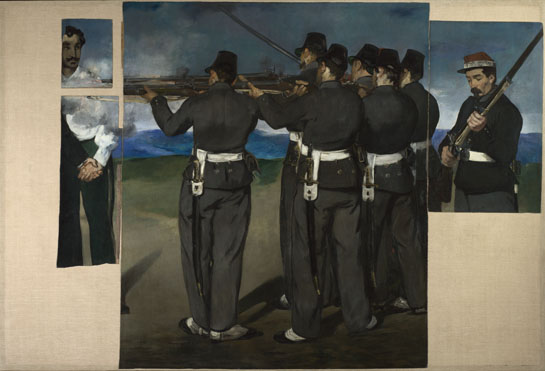
Manet's collection here was small by comparison to Monet's, and yet he still has some truly stand-out pieces for the visitor. There is 'Eva Gonzalès', 'Corner of a café-concert', not to mention the opposing centre piece to Monet's 'Water Lily pond', the reassembled 'Execution of Maximillian'. What marks out Manet distinctly then was his was of capturing people and their expressions in Impressionist style.

Van Gogh and Cézanne
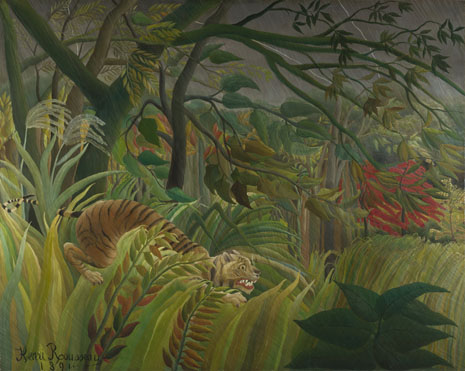
Third on this visit, which if the visitor follows the route from the previous two rooms, would be greeted by the Post-Impressionist painting 'Surprised' by Rousseau. It is a fine piece however, lending expression to the stalking Tiger in the foreground, and a florid jungle scene around it. The painting style is very different too, with long, careful, deliberate strokes, and earthy colours.

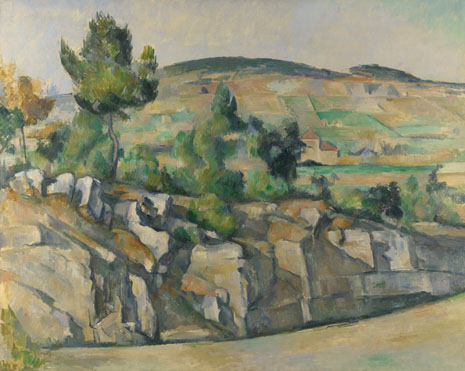
This leads nicely on to Cézanne's paintings, which seem to incorporate a range of rich colouring, with long firm brush strokes, rendering his paintings the feeling of deliberation. His paintings are of a more balanced range, with the life pictures like the 'Bathers', displaying symmetry and blending of man and nature, the bright and calm 'Hillside in Provence' showing an idyllic Mediterranean scene, and other notable paintings, 'Avenue at Chantilly' and 'Landscape with Poplars', both of these are very green examples, the latter makes for a wonderful scene from Provence.

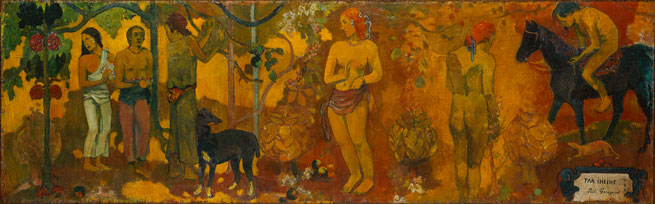
After Cézanne, Gauguin, with his earthy colours, and deliberate painting style. This room had a few of his, one particularly interesting example is 'Faa Iheihe', with it's imagery of Tahitian women and men. The other two interesting pieces of note here is 'Still life with mangoes', a plethora of exoticism, arrayed out in the form of mangoes, as it would have appeared back 1896 when the painting was finished, and 'A vase of flowers', which unlike many previous examples is not likedr any interest in the character of the subject, but purely in the details of the flowers and the colours used in their composition.

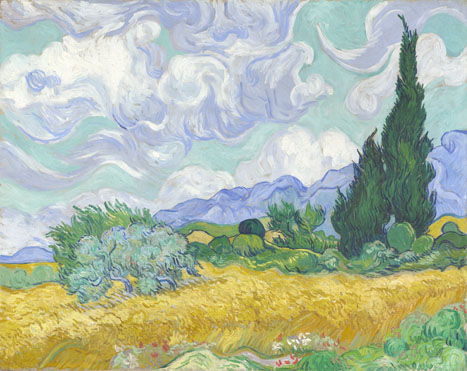
Last, but not least, Van Gogh with his rich, bright colours, and quick brush strokes, known over the entire world, and at the centre of his display, the iconic 'Sunflowers'. Admittedly still life is not particularly endeared to the author, however it is difficult not to appreciate the style of this piece, and the colours used. Surrounding this, other pieces worthy of mentioning would be the richly detailed 'Two crabs', and 'A wheatfield with Cypresses' with its impressive view.
Degas and Art around 1900
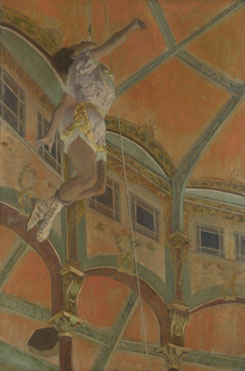
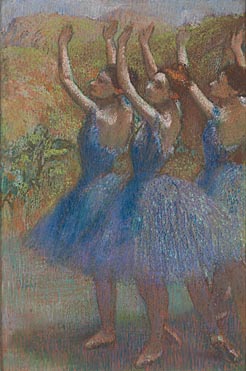
The last room on this tour centres on Degas, with an array of scenes, many with models in them, including all the eye-catching examples of note, 'After bath, woman drying herself' as the subtle use of nudity gives it its eye-catching quality, to the feat of strength captured in 'Miss La La at the Cirque Fernando'. However the very best were the dynamic paintings that feel like they had captured their movements as in photographs, 'Russian Dancers', 'Three Dancers in violet tutus', and 'Ballet Dancers'.
Apart from Degas, there was a range of paintings, one or two per artist scattered around the room, giving views of the time, as seen through their eyes, but there was the large and beautifully rendered 'Terrace at Vasouy'. Originally painted as one in 1901, and later split in to two halves, 'The Garden' and 'The Lunch', with extra people and details added to complement each singular half, in 1935.
This concludes the tour of Impressionism and Post-Impressionism as on display in the National Gallery. It was a fairly length one at that, comprising of four rooms in the gallery, each one containing dozens of fantastic paintings and some documentation of their times. As part of the permanent collection, there is no particular rush to see them, but in one's lifetime is as good a time as any.
Images here are courtesy of the National Gallery.
On this visit to the National Gallery, the main focus was to tour a collection of rooms that were briefly looked at on the previous visit. Now for a review of the National Gallery's collection of Impressionist and Post-Impressionist paintings.
Of the rooms concerned, they have a simple décor, with plain brown-grey painted walls, plain white ceilings with some nicely crafted decorations and some windows to give air and light. As for lighting in general, there are plenty of spot-lights dotted around, giving plenty of light to see details. All this amounts to rooms with a complete focus on the exhibits only.

The Harry and Carol Djanogly room.
This room opens out, in the middle of this series of four, with nothing short of the 'Bathers at Asniéres' surrounding by a small portfolio of smaller pieces by Georges Seurat, including his studies for the Bathers. All of these show off his calm use of colour, and particular dotted style of painting that composes the scene. The centre-piece itself gives off a particularly tranquil feeling, depicting a scene of calmness in all the people shown.
While Seurat was certainly the centre of attention here, the room has quite a number of other paintings on display of other famous painters of the period, starting with none less than Renoir, and a flurry of vivid and colourful paintings. 'Nymph by a stream' was an eye-catching example for both its use of contrasting colour, the dark green background to the pale nude model in the centre, and classical mythological aspect, followed by the wide range of soft colours in 'Dancing girl with tambourine', and 'Misia Sert', the former gives a dynamic feel of movement, while the latter shows a still model with a relaxed look.
Last notable artist in the room was Pissarro, with a selection of landscape scenes, with the exception of his 'Portait of Cézanne'. There were a few paintings of cottages and country landscapes in both France and England, one example being 'Fox hill, Upper Norwood', there was also the 'Boulevard MontMartre at night', though it lacked its day time counterpart here.
Monet, Manet, and Impressionism
The second room of this tour takes one through another selection of the famous, though by reading the introduction, one gets the impression that these artists were seen as infamous within artistic circles. After that, one then should gain a considerable appreciation of the efforts these artists expended in embarking on an artistic style that alienated them from the mainstream.
Monet was the first one on this tour, with his use of bright colours, and quick brush strokes. There were quite a number of excellent scenes, but a few really do catch the eye, such as the sombre coloured 'Thames below Westminster', the winterscape titled 'Snow scene at Argenteuil', and 'The Grand Canal, Venice'. There was also a selection of vivid garden scenes, comprising of the famous 'Water Lily pond' next to the smaller 'Water Lilies, setting sun'.
 |  |
 | |
Now if one goes across the room, or will be just made aware of the rest of Monet's paintings in this room, more landscape scenes such as the sunny 'La Pointe de la Hève, St. Addresse', dark and smoky 'Gare St. Lazare', and the almost fluidly painted scene 'Bathers at La Grenouilliere'.
Moving on, there are the more subtle colours of Sisley in 'The watering place at Marley-Le-Roi', 'The small meadows in Spring' and 'The Seine at Port-Marley'. All excellent examples of another major Impressionist, despite not necessarily the first to spring to mind.
Manet's collection here was small by comparison to Monet's, and yet he still has some truly stand-out pieces for the visitor. There is 'Eva Gonzalès', 'Corner of a café-concert', not to mention the opposing centre piece to Monet's 'Water Lily pond', the reassembled 'Execution of Maximillian'. What marks out Manet distinctly then was his was of capturing people and their expressions in Impressionist style.
Van Gogh and Cézanne
Third on this visit, which if the visitor follows the route from the previous two rooms, would be greeted by the Post-Impressionist painting 'Surprised' by Rousseau. It is a fine piece however, lending expression to the stalking Tiger in the foreground, and a florid jungle scene around it. The painting style is very different too, with long, careful, deliberate strokes, and earthy colours.
This leads nicely on to Cézanne's paintings, which seem to incorporate a range of rich colouring, with long firm brush strokes, rendering his paintings the feeling of deliberation. His paintings are of a more balanced range, with the life pictures like the 'Bathers', displaying symmetry and blending of man and nature, the bright and calm 'Hillside in Provence' showing an idyllic Mediterranean scene, and other notable paintings, 'Avenue at Chantilly' and 'Landscape with Poplars', both of these are very green examples, the latter makes for a wonderful scene from Provence.
After Cézanne, Gauguin, with his earthy colours, and deliberate painting style. This room had a few of his, one particularly interesting example is 'Faa Iheihe', with it's imagery of Tahitian women and men. The other two interesting pieces of note here is 'Still life with mangoes', a plethora of exoticism, arrayed out in the form of mangoes, as it would have appeared back 1896 when the painting was finished, and 'A vase of flowers', which unlike many previous examples is not likedr any interest in the character of the subject, but purely in the details of the flowers and the colours used in their composition.
Last, but not least, Van Gogh with his rich, bright colours, and quick brush strokes, known over the entire world, and at the centre of his display, the iconic 'Sunflowers'. Admittedly still life is not particularly endeared to the author, however it is difficult not to appreciate the style of this piece, and the colours used. Surrounding this, other pieces worthy of mentioning would be the richly detailed 'Two crabs', and 'A wheatfield with Cypresses' with its impressive view.
 |  |
Degas and Art around 1900
The last room on this tour centres on Degas, with an array of scenes, many with models in them, including all the eye-catching examples of note, 'After bath, woman drying herself' as the subtle use of nudity gives it its eye-catching quality, to the feat of strength captured in 'Miss La La at the Cirque Fernando'. However the very best were the dynamic paintings that feel like they had captured their movements as in photographs, 'Russian Dancers', 'Three Dancers in violet tutus', and 'Ballet Dancers'.
 |  |
Apart from Degas, there was a range of paintings, one or two per artist scattered around the room, giving views of the time, as seen through their eyes, but there was the large and beautifully rendered 'Terrace at Vasouy'. Originally painted as one in 1901, and later split in to two halves, 'The Garden' and 'The Lunch', with extra people and details added to complement each singular half, in 1935.
This concludes the tour of Impressionism and Post-Impressionism as on display in the National Gallery. It was a fairly length one at that, comprising of four rooms in the gallery, each one containing dozens of fantastic paintings and some documentation of their times. As part of the permanent collection, there is no particular rush to see them, but in one's lifetime is as good a time as any.
Images here are courtesy of the National Gallery.