Location: National Gallery, London
The National Gallery is by its own an imposing building, situated at the North end of Trafalgar square, and instead of blending in the background, stands out proudly as a great example of Neo-Classical architecture.
Inside is no less impressive, but also very confusing. It would take more than one visit to get a good idea of the layout, consisting of lots of rooms of a wide variety of sizes from large halls to small side-rooms. This overview is not a general one, but rather focused on a single room in this instance.
Continuing with the Romanticism theme from the last gallery (Tate Britain exhibition), this room contained paintings by a number of Romantic artists, including the previous two famous artists: J.M.W. Turner, and John Constable.
The room itself is nicely decorated, with blue patterned walls extending upwards to gold-coloured coving, above which are small arched alcoves bordered in maroon and gold, and finally to a large rectangular ceiling filled with lots of square panes of etched glass. The image below was taken from the virtual tour of the National Gallery:

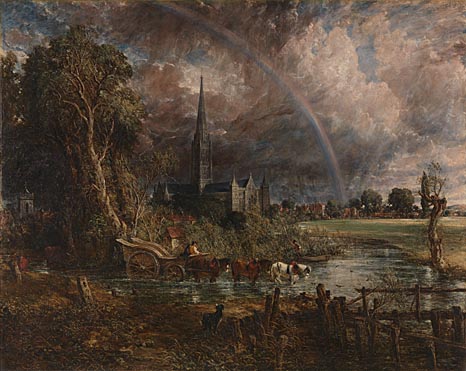
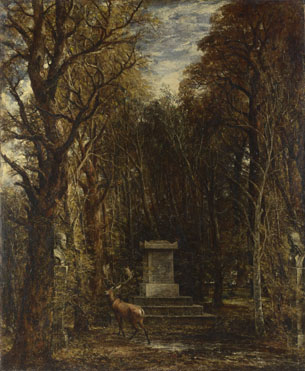
To begin with, in no particular order than by artist, John Constable's paintings covered more or less a third of the display, with the most preferred pieces being Salisbury Cathedral from the meadows, The Cenotaph to the memory of Sir Joshua Reynolds, and lastly, Hay Wain. The former two are both dark pieces but beautiful views:
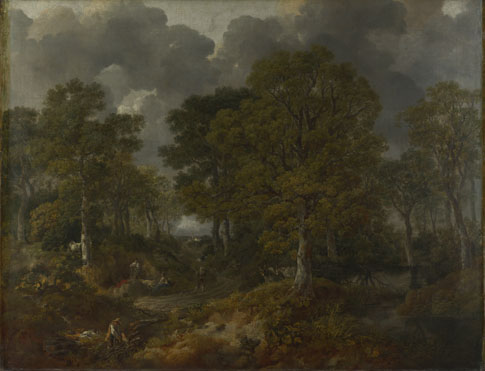
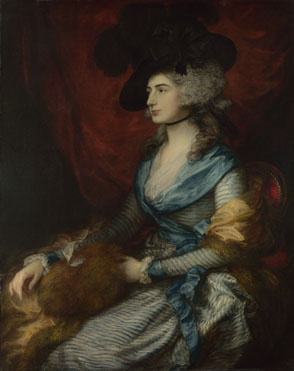
Continuing onward, Thomas Gainsborough had an extensive collection here too, with Cornard wood, near Sudbury, Suffolk and Mrs Siddons, a very famous actress of the time.
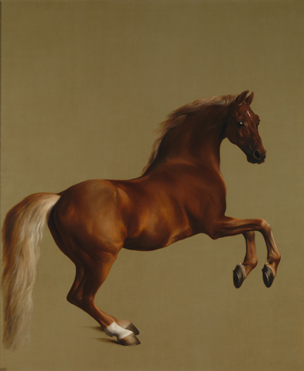
Moving on, other interesting pieces worth looking over are Henry Raeburn's The Archers, Pompeo Giolamo Batoni's Humphrey Morice, and William Hogarth's The Graham children, which in the description noted that the youngest had died before the painting was completed. Though amongst these stands out two amazingly detailed pieces, one being a life-size painting of WhistleJacket, a race horse, by George Stubbs.

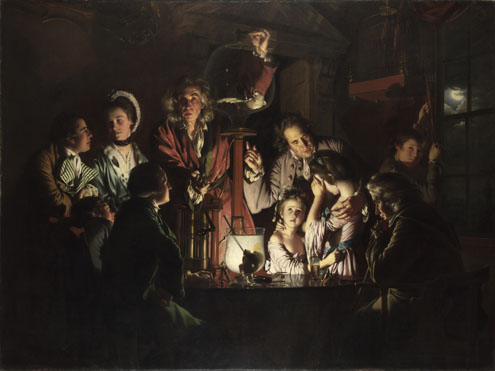
The next was An Experiment on a bird in an Air Pump, by Joseph Wright of Derby. This piece is particularly noticed by visitors to the room as it shows exceptional detail in the paintwork, and the realism in the faces of the girls standing by the table. Even the use of candlelight for the central piece creates an appealing contrast between the illuminated experiment set-pieces, and the dark surrounds.

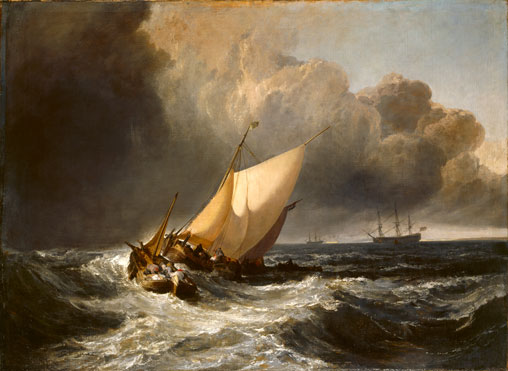
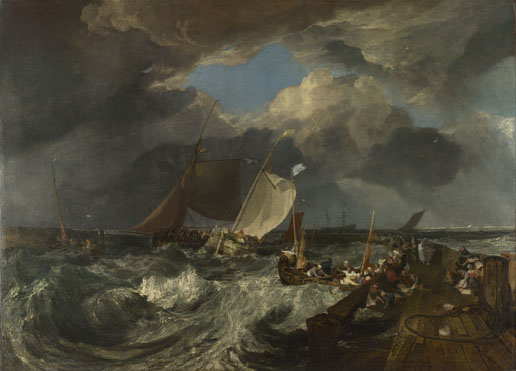
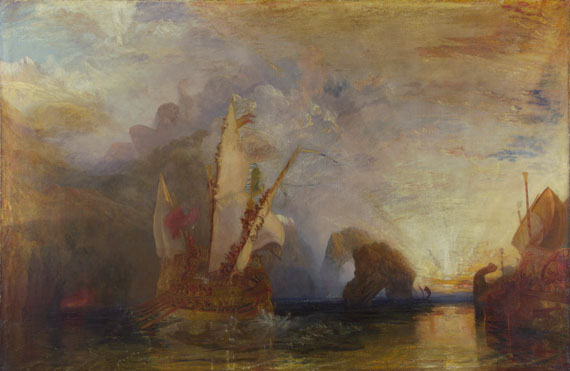
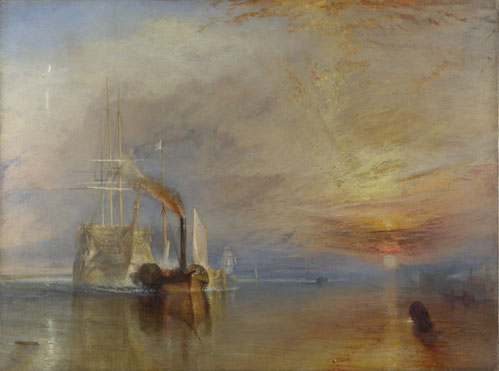
Lastly then, J.M.W. Turner also makes an appearance as well, with almost as many fine pieces as Constable, though they are all of a maritime nature. There are a few worth noting here, from the dramatic scenes of Dutch boats in a gale and Calais Pier, to the much calmer and brighter pieces, Ulysses deriding Polyphemus and The Fighting Temaire.
Conclusion, this is a small part of the immense National Gallery, and as with all posts of this blog, serve as a small introduction to what is available.
Images have been yanked from the National Gallery website.
The National Gallery is by its own an imposing building, situated at the North end of Trafalgar square, and instead of blending in the background, stands out proudly as a great example of Neo-Classical architecture.
Inside is no less impressive, but also very confusing. It would take more than one visit to get a good idea of the layout, consisting of lots of rooms of a wide variety of sizes from large halls to small side-rooms. This overview is not a general one, but rather focused on a single room in this instance.
Continuing with the Romanticism theme from the last gallery (Tate Britain exhibition), this room contained paintings by a number of Romantic artists, including the previous two famous artists: J.M.W. Turner, and John Constable.
The room itself is nicely decorated, with blue patterned walls extending upwards to gold-coloured coving, above which are small arched alcoves bordered in maroon and gold, and finally to a large rectangular ceiling filled with lots of square panes of etched glass. The image below was taken from the virtual tour of the National Gallery:

To begin with, in no particular order than by artist, John Constable's paintings covered more or less a third of the display, with the most preferred pieces being Salisbury Cathedral from the meadows, The Cenotaph to the memory of Sir Joshua Reynolds, and lastly, Hay Wain. The former two are both dark pieces but beautiful views:
 |  |
Continuing onward, Thomas Gainsborough had an extensive collection here too, with Cornard wood, near Sudbury, Suffolk and Mrs Siddons, a very famous actress of the time.
 |  |
Moving on, other interesting pieces worth looking over are Henry Raeburn's The Archers, Pompeo Giolamo Batoni's Humphrey Morice, and William Hogarth's The Graham children, which in the description noted that the youngest had died before the painting was completed. Though amongst these stands out two amazingly detailed pieces, one being a life-size painting of WhistleJacket, a race horse, by George Stubbs.
The next was An Experiment on a bird in an Air Pump, by Joseph Wright of Derby. This piece is particularly noticed by visitors to the room as it shows exceptional detail in the paintwork, and the realism in the faces of the girls standing by the table. Even the use of candlelight for the central piece creates an appealing contrast between the illuminated experiment set-pieces, and the dark surrounds.
Lastly then, J.M.W. Turner also makes an appearance as well, with almost as many fine pieces as Constable, though they are all of a maritime nature. There are a few worth noting here, from the dramatic scenes of Dutch boats in a gale and Calais Pier, to the much calmer and brighter pieces, Ulysses deriding Polyphemus and The Fighting Temaire.
 |  |
 |  |
Conclusion, this is a small part of the immense National Gallery, and as with all posts of this blog, serve as a small introduction to what is available.
Images have been yanked from the National Gallery website.


