Tuesday, 7 February 2012

London pubs: Anchor Tap, & Horniman at Hay's


Location: Anchor Tap pub, London


From an unassuming exterior down a side street near to Tower Bridge, this public house retains much of the character of its age. While finding details on its past is sketchy, the pub was run by the Courage Brewery from 1787, when the Anchor Brewery closed down, to 1981 where it has since been run by the Samuel Smith's Brewery company.

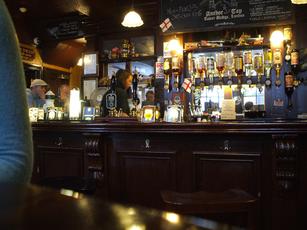
Through the front door, one is greeted by a venue from a time long before, with a dark murky feel from the cream and brown patterned walls, and lots of dark wood panelling. The furniture itself is mostly of a dark wood, blending around the sides of each room of this deceptively expansive place.
Past the first bar area, to the right is a larger room, with more furniture for drinking on, stools and chairs surround the front sides of a variety of circular or rectangular tables, with the walls lined with cushioned benches. Even a piano offers itself as a surface, with a line of stools along its front, and a smouldering fireplace in the corner.
The walls of the room are covered in a wide array of black and white photos, hinting at the long history of the place, showing scenes of the street outside, and of the Thames river, elaborating on the history that London has as a once major port for sea trade.
Moving on, the games room is smaller by comparison, with more of a murky dark appearance despite the increased light from a large window, containing some furniture and a couple of games machines on one side.
In keeping with this theme is a back room of similar size but more square in shape, lighter décor and lighting is used in this room to provide the required lighting over the central pool table, while benches line the sides for onlookers.
Last on the downstairs is the lounge room, where the décor is lighter in colour than the rest, with more comfortable seating around low tables, the armchairs covered in patterned cushioning.

Going upstairs, one is greeted with the dining area, which consists of three rooms, the smallest of which is separate from the other two, while the largest contains the upstairs bar in one corner. The rooms are outfitted with laid out dining tables and comfortable seating, fully-cushioned benches and armchairs, their patterns introducing a pleasant shade of green to the surrounding colours.

An extremely pleasant pub overall, though very quiet on a Sunday, with a good amount of room for a backstreet venue. It offers a certain solitude away from the bustling crowds of Central London, and nearby, a short stroll to the Thames path for a walk along the Thames bank.

Images by the author, and BeerintheEvening.

Location: Horniman at Hay's, London

A good sized pub just off the side of Hay's Galleria, which is a very tall arcade with a good twist of Victorian décor, and even a steampunk statue in the center. The entrance itself simply takes the visitor right in to the thick of the atmosphere where the brightly lit bar area greets one, and a rich assortment of colours and styles create a seemingly decadent feel to it. One does indeed feel like they have stepped in to what a gentleman's club would have appeared in Victorian times.


There are cream coloured walls, dotted with gold framed hangings, gold-coloured trimmings and theatre-like decorations for the ceiling. Several chandeliers hang down over the bar area, highlighting the colour of the wood much more brightly, while moving further in, one will find that it is more dimly lit, there the staircase leads one up to the mezzanine dining area.


Walnut-coloured wood panels, railings and shelving behind the bar makes a change from the usual dark wood, while murals line the walls above the bar, and along the outer edge of the mezzanine, depicting scenes of Britain's seafaring and colonial history in exotic locations.

The bar contains the usual set of lagers that many other pubs have, along with a few common ales found in London. However it does also contain some guest ales and Belgian beers.
The locale is warm inside, and evidently it is frequently busy, even during Sundays. Recommended as a place to relax with company, and to try whatever ales there are available.

All pictures done by the author.

Saturday, 4 February 2012

Visions of Earth, and other Galleries, Natural History Museum


Location: Natural History Museum, London

This visit to the Natural History museum was the first such visit for over a decade for the author, and as such, not only were a few of the galleries reviewed, unintentionally, but there are more plans to try and give a complete overview of the museum in subsequent visits.

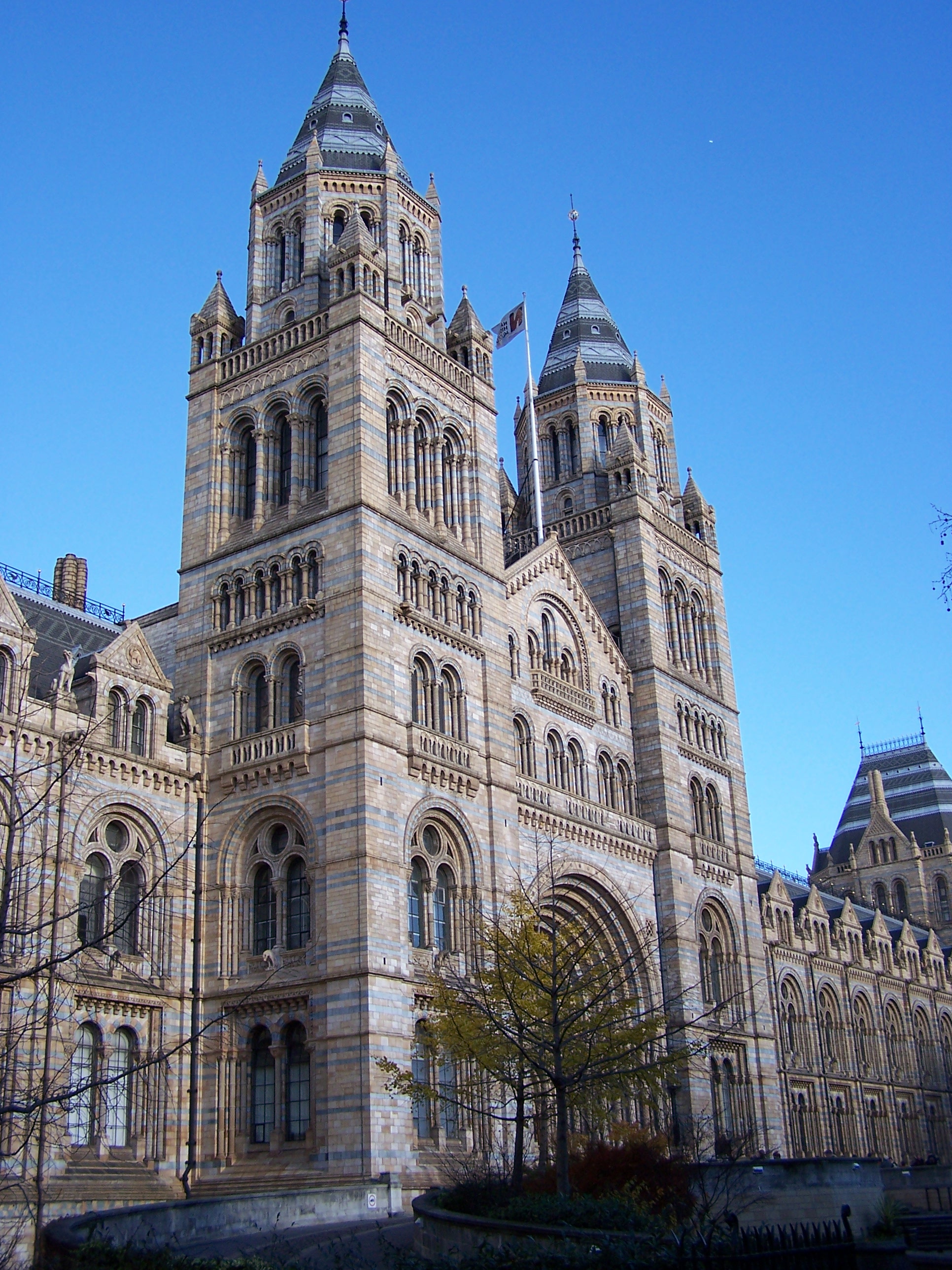
First impressions are one of the museum's strongest, the large building stretching out where one stands at the front, exquisite architecture over the entire facade, especially featured are round arches over the doors and every window. The building is composed of sandy coloured bricks, interspersed by patterns of grey bricks. The location itself is memorable, situated in one of the most affluent areas of London, by South Kensington station, and adjacent to both the Science museum, and the V & A museum.

The review, situated on the east side within a newer extension of the main building, is in the red zone, and begins with the gallery “Visions of Earth”, opens on a room with six statues lining a corridor through; Some notable ones being Zeus, who had a selection of hand-axes to illustrate the first humans in Europe around 400 000 years ago, Medusa, the aspect of petrification with a selection of petrified life as the ancient greeks would have seen, including a large fossil, and a cyclops, highlighted that the origins of which would have been from the skull of a Mastodon.


The walls of the room are lined with small 'peep-holes' containing examples of gemstones and other interesting rocks, as well as some explanation of their use and perceptions by humans. Through the middle of all this, an escalator goes up, through the middle of a large metal structure of the globe, humourously playing metal music inside, and leading onwards to more connected galleries including the “Restless Surface” and the “Power Within”, all giving a view in to the massive range of expressions that show how dynamic the surface of the Earth is.

After the escalator, one is greeted with a dark room, and side exhibits leading the visitor through, first showing some large rocks and how they were formed by the simplest of geological forces as a set of adjectives, 'forcing', 'squeezing', 'shattering', and more. Next was an exhibit highlighting the number of volcanoes and earthquakes around the globe, a screen shows the number of recent earchquakes and their magnitudes, to a series of images, showing the Earth's continents as they were 250 million years ago, today, and in 250 million years in the future.
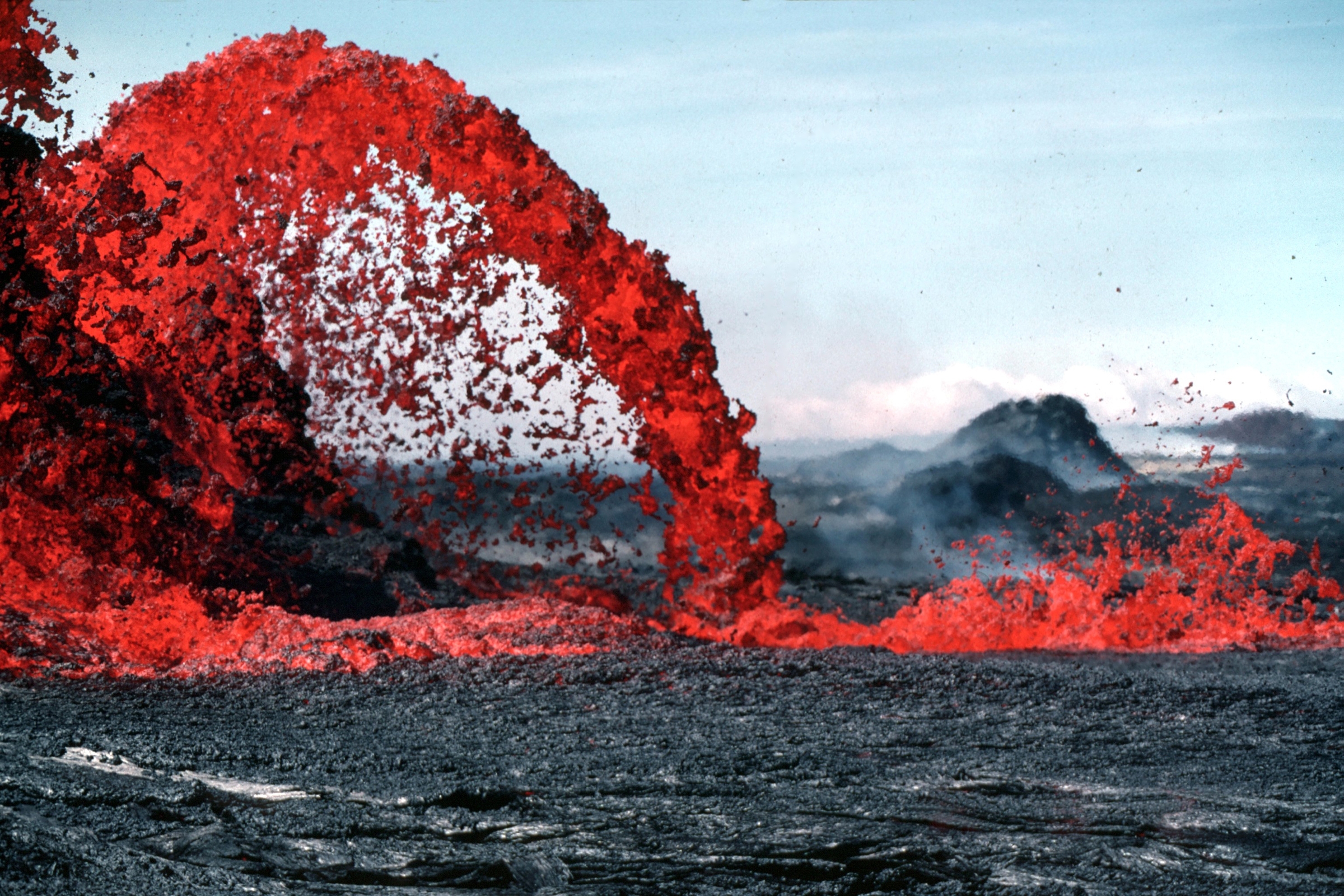
The next area began with showing the eruption of Mount Pinatubo in the Philippines, and the resulting effects on the local people, including the death toll of 800 people despite an evacuation prior to the eruption. Moving further in, there was a range of displays of the different types of lava and their solidified forms, including the well known runny lava flows, pahoehoe, and the incredibly delicate looking Pele's hair. Many more besides, it shows the range of types of rock and volcanic glass formed from various types of eruptions.


Spray of pahoehoe lava.Pele's hair
This leads in to another dark room, a circular area with the center filled out by a statue of a magma core that form below volcanoes. Round this is a summary of the internal workings below the surface that precede volcanic eruptions, and around this, are other examples of volcanoes that impacted on humans, from Mount St. Helen's, Mount Pelee in the Caribbean, and Mount Vesuvius.


Moving on, one eventually comes to a section on earthquakes, with a summary of how they are caused, along with an illustration of the Richter scale, and even a vibrating room to demonstrate the effect of the Kobe earthquake.

The rest of the exhibits trail on through a variety of other displays of geological forces, moving to surface level weathering forces such as wind, water, ice, and the chemical weathering forces. Here a lot of time can be spent with the variety of attractions, displays of rocks, and a plethora of images and television screens.


This was an excellent tour, with plenty of tactile and visual attractions that appeal to both children and adults to educate one in the vast range of forces and effects that the Earth displays, ranging from the passive sedimentation and compaction forces, tectonic shifts, to the more violent shows of volcanic eruptions and earthquakes. This is by no means a comprehensive guide, and only half has been given in the review above. For the lone visitor, the weekend is a better choice in order to avoid the numerous children on school trips that might otherwise be busying themselves around the attractions.
Images yanked from the Natural History Museum, from Wikipedia and from another blog: Lovingthebigisland's

Mozart concert, Spitalfields

Location: Christ church Spitalfields, London

This is a shift away from exhibitions and established locales to a concert hosted at the Christ church in Spitalfields, London.

The event was a classical orchestra, the London Arts Orchestra, giving a performance of Mozart.
The venue itself is an example of some of London's interesting history. Built in 1714 as one of the 'Commissioner's churches'. Wikipedia gives a more detailed account of the church, but it is safe to assume that everything, from the outside, to the interior decoration remains as it was, kept well maintained by the Anglican church. The church is noticeable from quite far away as the height of its steeple towers over the surrounding buildings. The front is like that of many Anglican churches, with a grey stone facade, a front portico with columns lining either side, leading a visitor up the steps to the front doors.
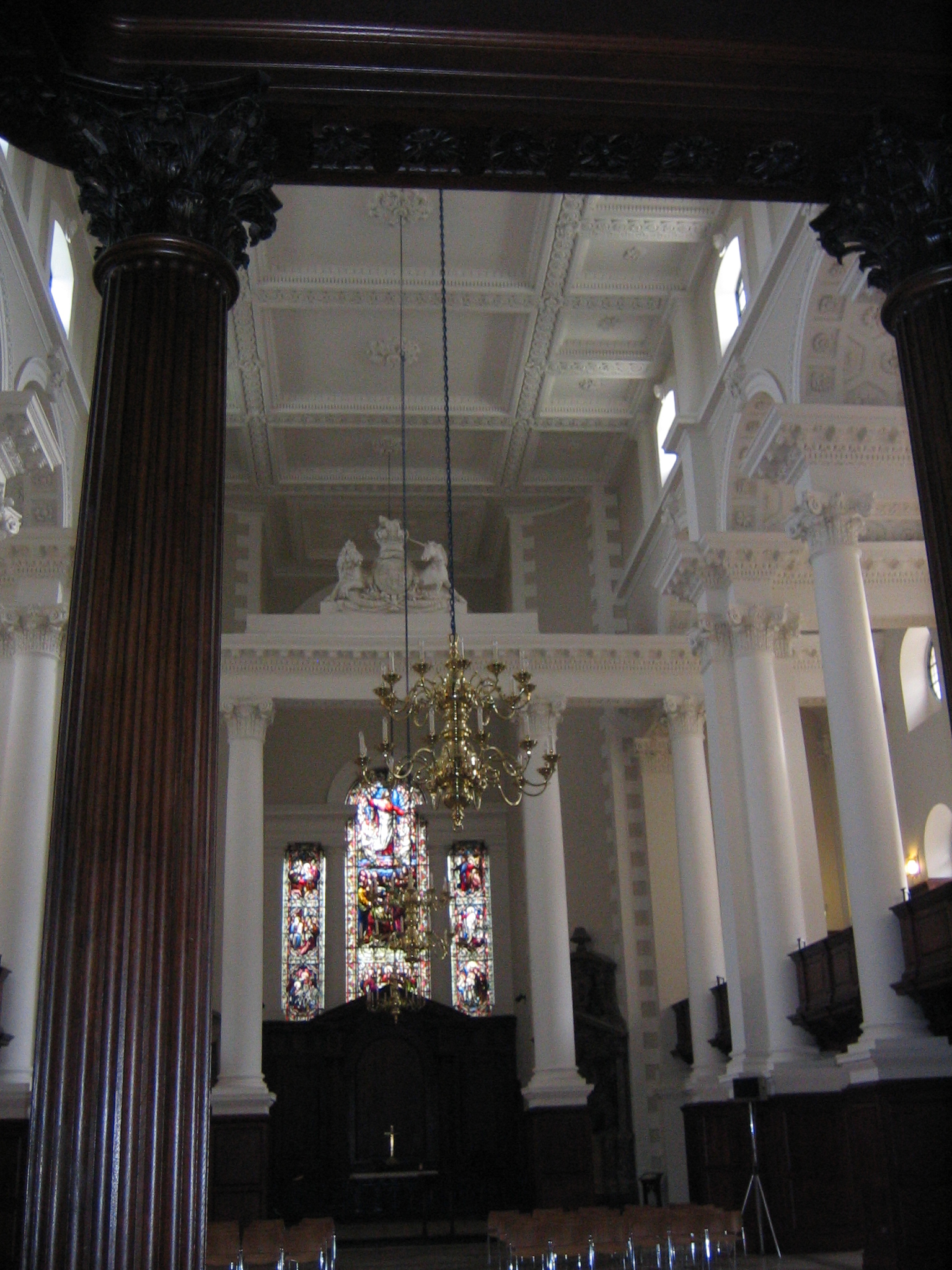
Inside the scene changes entirely, from grey to vista mostly of rich whites and dark wood colours. While most of the walls are painted white, all along the lower walls around the sides, and the bases of the inner columns are pannelled in dark wood, like mahogany.

The view near enough to where the author was sitting.Main vista through the front door
The main hall is a splendid example of what looks more like a symphony hall, the columns lining the sides, rich decoration adorns every inch of the view. Across the hall, a large crafted beam frames the far end, with just the altar and a generous area around it behind. The altar itself is a fine piece of work, consisting of a dark wood frame around three paintings, the left showing what appears to be a spray of fire, the middle is a stormy scene with a fork of lightning going through it. The right side is of a more serene, a cloudy sunset, or sunrise, in bright orange hues. Note: It appears from other images of the venue that these paintings are not necessarily part of the normal decoration for the altar but are just for the concert.

On to the music, the first act was a selection of calm tunes, with half an orchestra consisting of strings. Particularly the two leads, one violin, one viola, producing a wonderful feeling through the music, and the hall itself displaying its amazing sound carrying design that makes the scene all the more appropriate. The only thing that really spoiled the scene was a bright presentation screen on the side that flickers and distracts one from the music.
Later the music got faster and more jovial, the deeper sounds reverberating through the walls to reach the listener. This builds up slowly to conclude the first half of the concert.

The second half began with a memorable piece, utilising a now full orchestra consisting of more strings, percussions, and wind instruments. The build up was fast paced, producing an amazing sensation before falling back down to quieter movements. This rising and falling marks the majority of this half of the concert, with pieces blending in to others with few actual pauses in between.
In the writing of this, the author realised that strangely the music obliterates all that preceded it, leaving only a sensation and emotion of the pieces before.

It is also of note that clapping before the end gives the feeling of isolation and of being a temporary center of attention.

As the second half proceeds, the finale makes itself apparent by its delicate start, building up slowly this time before reaching what sounds like a triumphant march, moving faster in beat before reaching a crescendo and building down to almost inaudible levels at the very end.

This is an example of other types of events that occur in London, should one be fortunate enough to hear about them. Almost spontaneous, all one needs to do is turn up. It gives one a free pass to enjoy an almost underground scene in cultural performances, and should be encouraged by more people.

Images courtesy of Wikipedia, and a Google image search.

Saturday, 21 January 2012

Sutton Hoo Burial and other sites, British Museum

Location: British Museum, London

The second trip to the British Museum for this blog, this time a return to an exhibit briefly perused during the previous visit.
This side exhibition room is just past one of the museum shops, of which mostly contains a plethora of books, jewellry and other odds and ends at pretty high prices, though are admittedly worth the cost should one find the right gift. However that is not the subject matter at hand.
Past the shop is the main exhibit, a room which is both small and yet expansively opens out for the visitor due to shape and the high ceiling, with dark coloured walls lining the brightly lit room. The center of this room is where the display cases contain the artifacts of the Sutton Hoo burial ground, and other notable artifacts from other Saxon and Viking burial mounds.

Going through these in no particular order, the first display case one would go to would contain the main artifacts, including the iconic Saxon King helmet, and it's intricate features on the mask, which according to the inscription was made up of iron with gold decorations and silvered bronze plating. The old worn helmet is shown, it's colour now resembling a muddy brown and green of corroded iron and bronze, but to illustrate how it must have looked when put ion the mound, a replica was created by the Royal Armoury in the 1970's to show how extraordinary it was, and yet was noted to still be an incredibly practical piece of armour. Next to the helmet is a replica shield adorned with the original metal pommel and decorations or iron and gold which had long outlasted the wood and hide of the original shield, and is noted as being the largest surviving shield of any Saxon burial mound. The rest of this display case also contains other weaponry, from the rusted remains of spears, to a heavily rusted longsword of particular interest as it has shown to have been of extremely fine craftmanship, made up of patterned folded steel, a replicated blade of this sword is shown in another display case, with gold rings around the handle, and finally a corroded mass that had once been a chainmail hauberk.


Moving through the other display cases, there are replicas of drinking horns and bottles with their original gold decorations around, among other pieces that all paint a picture of the long held medieval view of large halls of feasting and drinking, despite the lack of actual evidence behind this. There are gold shoulder clasps for luxurious clothing, other elaborate gold framework pieces, jewellry and precious stone objects from the Frankish kingdom of France, to as far as the Byzantine empire, which during the time, of many other burials sites was at its zenith. There are also gold crosses and objects that show not only the old Saxon gods, but also since they had converted to the early Christianity. All of this changes the perception that the Saxons were far from the commonly held view of being warlike barbarians, but rather in truth they were rich, sophisticated traders and craftsman, and that the nature of luxurious living had changed very little from Roman times through to the early 20th Century, as even the Saxon nobles lived in luxurious clothing and ate extremely well and healthily.
Also from this time, the room contained display cases obtained from Viking burial mounds and celtic sites. The Vikings themselves are shown to be of the same industrious stock as the Saxons, even trading with the Saxons for similar commodities of weaponry, as found in Saxon burial mounds such as the Pentney hoard, and large quanitities of silver-ware, mostly jewellry and decorations, as is found in the notable Cuerdale hoard.


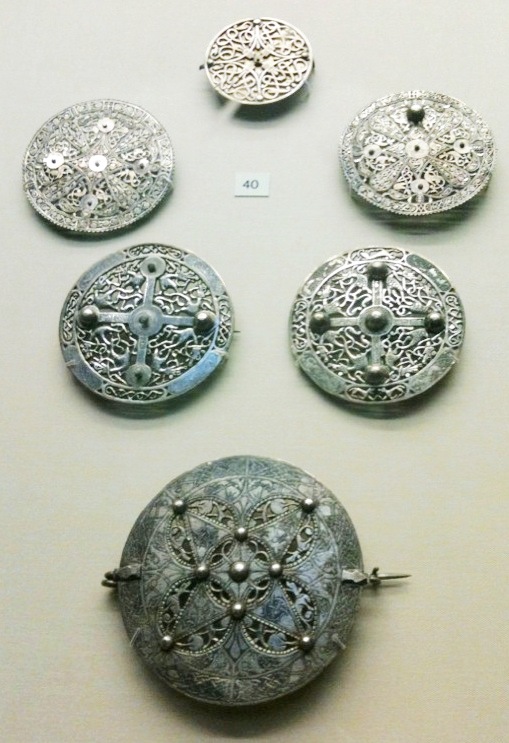
From Ireland, there was Saint Cuileáin's bell, and silver irish brooches, gold Viking jewellry, 'hoard cups' and gold rings. There were some examples shown of Celtic artifacts, bearing their distinctive curvilinear patterns, and many showing red enamelling amongst the metalwork, and even from Saxon sites, evidence of trade with the Celts in the form of copper hanging bowls which were in fact prized by the Saxons.

Lastly of this part of history, there is a collection of Frankish artifacts, and silver-ware from the Martynivka hoard.

One other area of this room which attracted attention is a selection of artifacts that predate the vast majority of ancient human history, starting with the oldest piece in the entire British Museum, a rouch handaxe from 1.8 million years ago, followed by selection of other handaxes through the ages until more sophisticated tools replaced them, some examples of which include a 1.2 million year old volcanic rock handaxe from Olduvai gorge in Tanzania, 1 million year old, a quartzite handaxe of around 1 million years old from near Chennai, India, and a large selection of flint handaxes from Europe, mostly Britain and France, dating between 600 000 and 50 000 years old. Past that, there is a very interesting tool, a spear thrower with a mammoth carved in to it from Montastruc France, dating around 13 000 years old. A wolverine carving pendant from Les Eyzies France; The oldest art from Wales which is carvings in a horse jaw bone, from Kendrick's cave; Finally the oldest ivory carving, of swimming reindeer, all of which also date to arounbd 13 000 years ago. The final piece of interest is the oldest depiction of one of humanity's greatest pleasures, a calcite piece called 'Lovers' depicting two people in an intimate position, dating to around 11 000 years old.


This was a very interesting room, with a myriad of exhibits that has been barely covered in this review, and is recommended for any visit to the British Museum.

Images courtesy of the BBC, and the British Museum websites.

Sunday, 1 January 2012

Carcassonne, France

Location: Carcassonne, France

After Christmas, and New Years celebrations have come and gone, there is finally a new topic to post about, as and when they happen. For the new 2012, a new post:

Medieval Cathar city fortress. Two sets of ramparts on a hill, giving an imposing sight. This view does masquerade the main town that is contained within the walls. It is a myriad of alleyways fronted by shops, cafés and restaurants. The castle style seems to at least have been maintained throughout the grounds inside, with the sandy-colored stone being the dominant theme.


After entering the castle via the drawbridge, one passes through archways to the first street of shops. One of the first things one notices are the tourist shops displaying racks of medival weapons and armour, alongside small statues of dragons and wizards, miniatures of the castle and the racks of postcards.
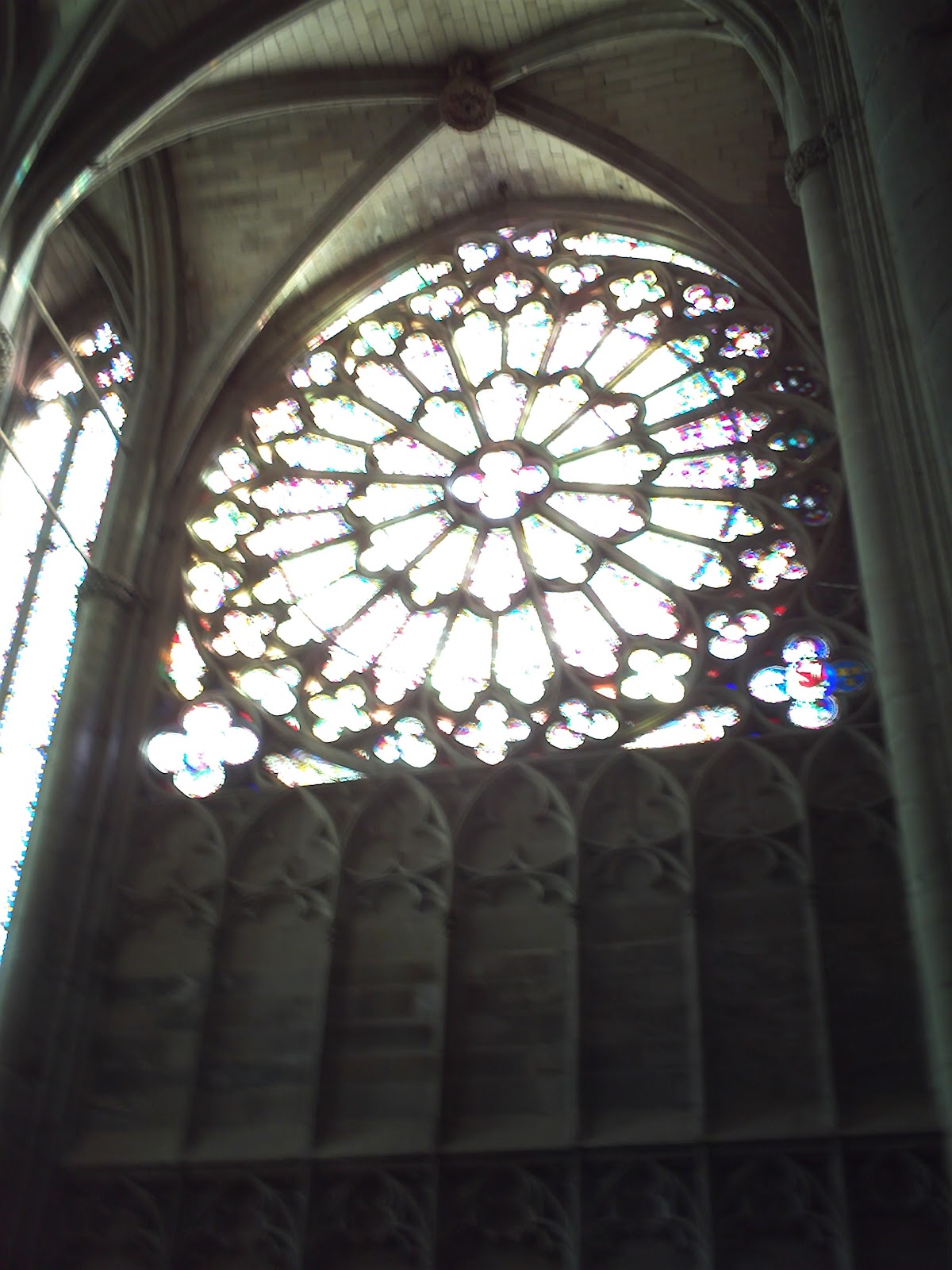
The first main place visited was the cathedral. A large stone structure like many others, inside is also alike to many. However at the head of the structure, there is a wide space surround by exquisite stained glass windows which affect an almost 'divine' atmosphere. The cathedral also contains religious statues within, mostly of the Virgin Mary, which are very nice to look upon, have become something normal in southern France.


Following this, one can then amble along the walls of the fortress itself, looking out upon the valley that stretches to the horizon, and to see the rest of the city that the fortress pre-dates.

Last place visited was museum of torture, or appropriately it's full name, Musée de l'Inquisition, Instruments de Torture & Chateaux Cathares. A small exterior to this little museum does little in itself to hide the theme of the place, where surrounded by medieval stocks, the entrance starts through a stone doorway and up winding stone stairs in to one of the older building of the castle itself, and through its passages are scattered numerous exhibits, the main part of which are the variety of torture implements, many old and incredibly unpleasant devices used to inflict serious harm on a person, many of which had been used in torture not for any meaningful purpose but to satisfy the sadism of many of the users, namely the members of the Inquisition. Lastly, towards the exit, the last main exhibit is a room devoted to models and descriptions of a selection of Cathar castles, as well as some reading material on why the French had destroyed the Cathars and their religion, namely in the name of the church in Rome and personal greed. With all that, one leaves the museum with a renewed sense of the castle around them, and how it was for the people who had lived before.


This concludes the short trip through Carcassonne, which is truly a site worth seeing, well deserving of it's status as a World Heritage Site.

Lastly, images above were taken by the author except for the two on the Museum of Torture, which are from Virtual tourist and La Depeche.fr.

Tuesday, 13 December 2011

St. Martin's Tea Rooms - Chichester

 Location: Chichester, West Sussex

After a long sojourn wherein some travelling was the main agenda, there have not been much in the way of posting opportunities. So here is a small one, but without any fitting pictures of the occasion.


On to the main event. The St. Martin's Tea Rooms, situated down a small side-street in medieval Chichester, or that is what it feels like. Nothing is particularly grand about the place, with a rather unassuming exterior from what one could approximate as a large Victorian family house.


Inside, the place does not open up, but guides one in to tea rooms themselves, small, cosy rooms with a single contrast of colours, white walls and ceilings against the dark brown carpet, and wood fittings, and furniture everywhere. It is these colours, alongside the maze-like layout, where stairs appear behind what one thinks is a front door, and rooms round corners opening up spaces to the visitor which defy one's perception of space, and offer an amazing sense of privacy. However this is not without the cost of getting lost, and bumping the head on the many curved walls and low ceilings. The service itself is of a non-invasive character, where after ordering down at a canteen like fixture, the drinks and dishes are served quickly and almost silently by 'Victorian maids' as one is supposed to garner from their uniform.


The food itself is very pricey, and would deter many who would seek quantity over quality. This author considers that an accurate assessment of the venue, but this should not be an insurmountable obstacle. The food is excellent and is well advertised as organic fare. There is not much in quantity, but this should lead one to carefully savour the food and explore the flavours that have been put in to the dishes. Granted what was tried was the Welsh rarebit, and the organic lager, which form the basis of this opinion. Though there is nothing on offer that would not satisfy the taste buds even if it fails to satisfy one in quantity.

It is hard to be objective about this venue, which also has quite some history with the author, but if one was to pick out a few faults, these have been mentioned, and will be summed up:
First, the venue is not suitable to those who approach six foot or more, due to the low ceilings and cramped quarters.
And second, the fare is expensive and of low quantity.
Despite these couple of faults, one is offered the classically Victorian styled tea rooms, with a pervading quiet, and privacy to relax. The food is of excellent taste, and in general makes for a un-ordinary indulgence.

This is all that has been worth noting over the previous weekend, and this week will hopefully bring some new sights, complete with photos of an area by the author himself.

Photos here are courtesy of the home page for this tea room,St. Martin's tea rooms 

Sunday, 4 December 2011

British Library - An Introduction

Location: British Library, London

The main building for the library appears as a large modern complex, with walls extending around it on the road sides encapsulating a multi-level courtyard. Upon entering, one gets to glimpse the tops of the St. Pancras Restoration Hotel poking out. To skip ahead, whilst inside the library, a scale model of the building also revealed several floors for archives, which the author estimates to exceed a volume of twice the above ground building.


Unlike previously mentioned sites, this one is not particularly grandiose, and seems to echo the stereotypical English reserve in architectural standards. Inside however proves to be a great improvement, opening up with marble staircases going up to the first floor around an information desk, and rising up behind the initial vista is a large column which proved upon closer inspection to hold rows upon rows of old books, segregated off with glass panes. Even so, there is no real impression of a library, but more like that of a University study building, with its clean and modern appearance.


The first exhibition is directly up on the first floor, and it is a small collection covering the subject of Charles Dickens, and the Victorian fascination with the supernatural. This particularly timely exhibition is to give the visitor a background behind Dickens' famous work A Christmas Carol, and of the variety of activities Dickens' himself indulged in, mesmerism to name one.

The next area on this small tour was a permanent gallery, the Sir John Ritbalt Gallery: Treasures of the British Library. This gallery contained a large variety of texts and illustrations, dating back as far as the 12th century, composed up of texts, sacred religious texts, early colour illustrations from around the world, maps and views, and even music sheets. Even some contemporary works on Shakespeare are part of the gallery, but the music sheets drew a lot of interest, showing printed sheet music from around the Normal Conquest to more well-known works of classical composers such as Mozart, Haydn, and Beethoven.
Early maps are also of especial notice, for the way that people before had viewed and drawn the world, with this changing in detail over the centuries. Particularly drawing to the attention are the mappaemundi, early flat-Earth based drawn of where many places were, and lastly, a detailed panoramic view of London, before and after the Great Fire of 1666, by Wenceslaus Hollar.


All the displays had descriptions beside them, to give the visitor a description and also explanation of each display item, and these serve as a great accompaniment to the illustrations. A room off the side of the gallery gives a view of the famous Magna Carta,  a landmark civil rights document detailing 63 statutes, signed and officiated by the Great Seal in 1215 during the years of King John and his submission to Pope Innocent III. Through tax and power abuses, the barons of the time got together to create a liberties document, and require the King to sign it, thus, according to the Wikipedia article:
...was the first document forced onto an English King by a group of his subjects, the feudal barons, in an attempt to limit his powers by law and protect their privileges.


To conclude, this was a small overview of the British Library, and future visits would have to be based on articles of interest within the reading rooms, which are not open during Sundays.

Images are courtesy of a variety of sources from Google images. Information was from the British Library website.